
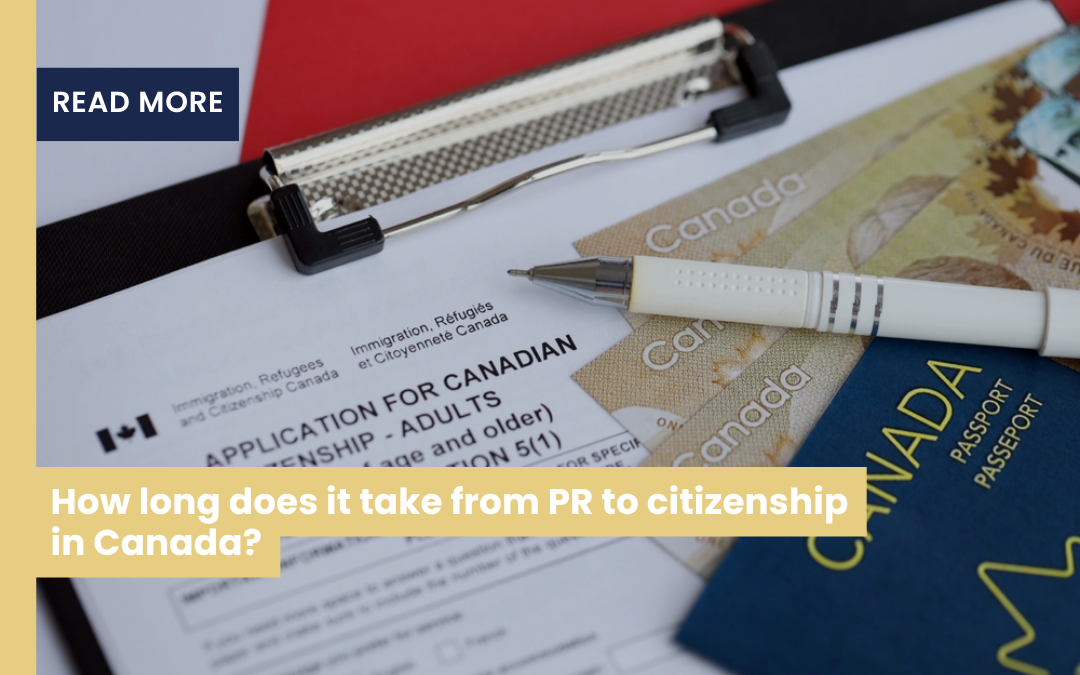
For many immigrants, permanent residency often feels like a significant milestone. It brings stability and a sense of security, and for some, that can feel sufficient for a time. As individuals settle into daily life, establish routines, and begin to see Canada as home, the next step gradually comes into view: citizenship.
The transition is neither immediate nor entirely predictable. Timelines can vary, requirements may differ based on individual circumstances, and even minor oversights can extend the process. While some applicants progress without difficulty, others may experience delays that are not always immediately clear.
This article walks through the complete PR-to-citizenship journey in Canada, including timelines, eligibility requirements, and factors that can influence how quickly you reach the final step.
Understanding the PR to Citizenship Journey in Canada
Moving from PR to citizenship in Canada is not just about time spent in the country. It requires meeting a defined set of criteria that demonstrate your connection to Canada, both legally and socially.
Permanent residents already enjoy many rights, but citizenship carries additional privileges, voting rights, a Canadian passport, and full civic participation. That distinction is why the process includes multiple checks, not just a simple waiting period.
Eligibility Criteria for Canadian Citizenship
Before focusing on timelines, it helps to understand what actually qualifies someone for citizenship. The requirements are structured but not overly complicated.
Physical Presence Requirement
Applicants must have been physically present in Canada for at least 1,095 days in the last 5 years. This is the foundation for the PR-to-Citizenship Canada time calculation.
Days spent in Canada before becoming a PR may count partially, but only under specific conditions, and even then, they are capped.
Income Tax Filing Requirement
You must have filed income taxes for at least three years within that five-year window. It sounds administrative, but it often becomes a point of delay, especially if records are incomplete.
Language Requirements
Applicants between 18 and 54 must demonstrate proficiency in English or French. This could be through test results or accepted documentation. For many, this is straightforward. For others, it takes preparation.
Knowledge of Canada Test
The citizenship test assesses knowledge of Canadian history, values, institutions, and rights. It’s not overly difficult, though some applicants underestimate it and end up retaking it.
All these factors together shape the timeline for Canadian citizenship eligibility, which isn’t just about counting years but also about meeting conditions within those years.
Minimum Time Required: From PR to Citizenship
Technically, the shortest path to citizenship in Canada is about 3 years after becoming a permanent resident. That’s assuming you meet the physical presence requirement without interruption.
In reality, though, most applicants take closer to four to five years when you factor in processing time and preparation.
Breaking Down the Timeline Step-by-Step
Time Spent as a Permanent Resident
The initial phase involves accumulating enough days in Canada. If you travel frequently or spend extended periods outside the country, this phase stretches longer than expected.
Meeting the Physical Presence Requirement in Canada
Reaching 1,095 days isn’t always as simple as it sounds. Travel records must align with declared dates. Even small discrepancies can trigger additional review.
This stage plays a central role in determining your PR to citizenship in Canada.
Applying for Citizenship
Once you are eligible, submit your application along with supporting documents. Accuracy matters here more than speed. Incomplete applications often result in returns or delays.
Citizenship Application Processing Time
Processing times typically range from 8 to 18 months. Some cases move faster, while others take longer due to background checks or document verification.
At this stage, the journey to citizenship with Citizenship and Immigration Canada becomes less predictable. You’ve done your part, but the timeline is no longer fully in your control.
Factors That Can Affect Your Timeline
Travel History
Frequent international travel can complicate physical presence calculations. Even well-documented trips may require additional verification.
Incomplete Applications
Missing documents or unclear information are one of the most common reasons applications are delayed. It’s surprisingly easy to overlook something minor.
Background Verification Delays
Security and background checks are standard, but timelines vary. Some applicants move through the process fairly quickly, with updates coming in at a steady pace. Others find themselves waiting much longer, often with little to no communication along the way.
Changes in Immigration Policies
Policies do change over time. The core requirements usually remain consistent, but procedural shifts can still affect how long things take and what applicants can expect along the way.
These variables collectively shape the time to citizenship with Citizenship and Immigration Canada, sometimes more than the base eligibility criteria themselves.
How to Track Your Citizenship Application Status
Applicants can monitor their progress through the IRCC online portal. Updates include application receipt, test scheduling, background checks, and final decisions.
Still, updates can feel infrequent. There are periods where nothing seems to move, even when processing is ongoing behind the scenes.
Common Mistakes That Delay Citizenship Eligibility
- Miscalculating physical presence days
- Not filing taxes consistently
- Submitting incomplete or inconsistent documentation
- Ignoring language proof requirements
- Waiting too long to apply after becoming eligible
Each of these can extend the time required for Canadian citizenship eligibility, sometimes by months or even years.
Benefits of Becoming a Canadian Citizen
Becoming a Canadian citizen changes your legal standing in meaningful ways.
You gain the right to vote, run for public office, and hold a Canadian passport. There’s no longer a need to keep track of residency requirements tied to a Permanent Resident Card, which removes a layer of ongoing responsibility.
Many also appreciate the flexibility of Canadian Citizenship Dual Nationality, where you may be able to keep your original citizenship while becoming Canadian, depending on your home country’s laws.
A practical advantage people often notice over time is the reduced administrative load. Unlike permanent residents, who must manage obligations like PR card renewal and monitor eligibility requirements, citizenship offers a sense of permanence with far fewer ongoing formalities.
How Chaudhary Law Office Can Help You Transition from PR to Citizenship
The shift from PR to Canadian citizenship might appear procedural, but legal guidance often makes a difference, especially in complex cases.
Working with an experienced immigration lawyer in Canada can help ensure your application is complete, accurate, and aligned with current regulations. This reduces the likelihood of delays tied to documentation or eligibility interpretation.
Chaudhary Law Office supports applicants at every stage, from eligibility assessment to final submission, helping streamline the PR-to-citizenship process with a structured, reliable approach.
Conclusion
The journey from PR to Canadian citizenship isn’t defined by a single timeline. While the minimum requirement is around 3 years, most applicants follow a longer path shaped by eligibility, documentation, and processing stages.
Understanding how each component fits together gives you more control over the process. And in many cases, that clarity makes the waiting period easier to manage.
Ready to move forward with your citizenship application?
At Chaudhary Law Office, we offer clear, practical guidance tailored to your situation. Whether you’re unsure about eligibility or preparing to apply, our team can assist at every step.
Call us today at 416-447-6118 to speak with a legal professional who understands the process and can help you avoid delays as you move confidently toward Canadian citizenship.
FAQs
How long does it take from PR to citizenship in Canada?
Most applicants take around 3 to 5 years, including eligibility and processing time.
What is the minimum time from PR to citizenship in Canada?
At least 3 years of physical presence within 5 years.
What is the physical presence requirement in Canada?
You must have been in Canada for 1,095 days in the last 5 years.
How long after PR can I apply for Canadian citizenship?
You can apply once you meet the physical presence and tax requirements, typically after 3 years.
What is the citizenship application processing time in Canada?
Processing usually takes between 8 and 18 months.
Can time spent in Canada before PR count toward citizenship?
Yes, some pre-PR time can count partially toward your eligibility, up to a limit.

Max Chaudhary
With over 30 years of experience, Moin (Max) Chaudhary is the founder and principal of Chaudhary Law Office — a distinguished Barrister & Solicitor holding a B.A. and J.D. A proud Toronto, Ontario native, he has built a strong and trusted reputation in the field of immigration law. A prolific author and sought-after lecturer, Max is regularly retained by the media, fellow immigration lawyers, and consultants alike for his insight on complex immigration matters, appeals, and Federal Court cases. He has served on the Executive of the Ontario Bar Association and served at Chair from 2025 to 2026.
