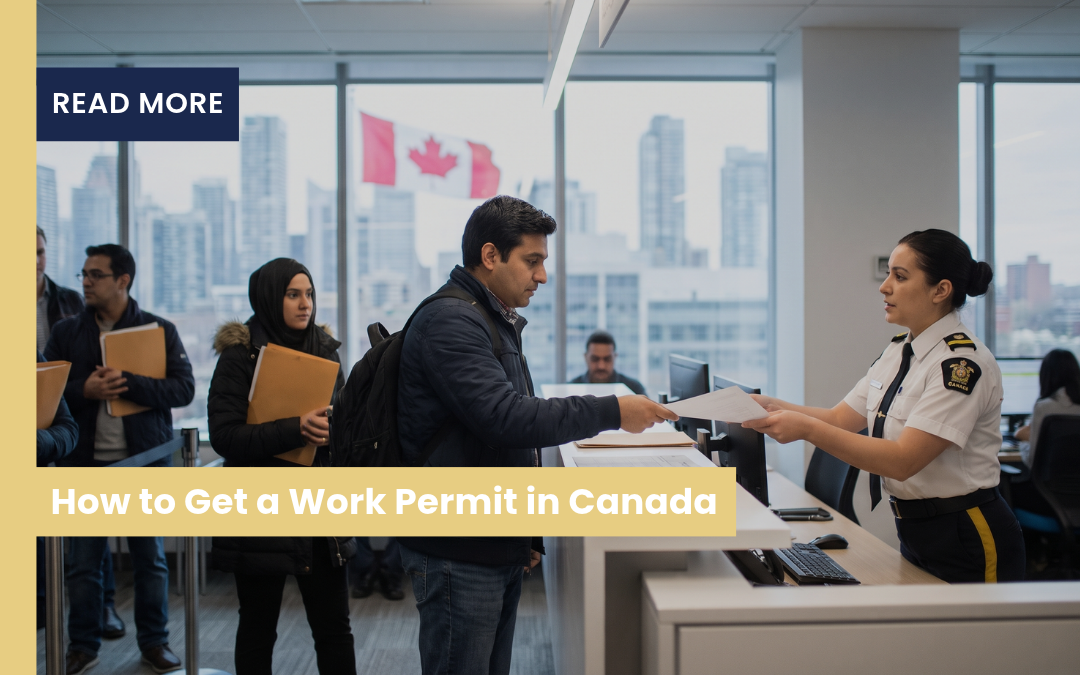
Have a Canadian job offer, an expiring permit, or plans to change employers? Start by checking which Canadian work permit you qualify for. An employer-specific permit generally requires your employer to take steps before you apply. An open work permit gives you more flexibility if you qualify under an eligible category.
Use this guide to check the steps for your situation, from confirming whether you need a Labour Market Impact Assessment (LMIA) to preparing your paperwork and responding to a refusal.
Do You Need a Work Permit to Work in Canada?
Most foreign nationals will require a work permit to work in Canada. There are some jobs that are exempt (e.g., certain business visitor activities), but the exemptions are very specific and don’t necessarily apply to every short-term assignment. You need to check the rules before you take on any work.
Types of Canadian Work Permits
Employer-Specific (Closed) Work Permits
An employer-specific work permit will tie you to the employer, the job, and, in some cases, the location as shown on your permit. You’ll generally require a job offer, and your employer may require an approved LMIA or an exemption.
Open Work Permits
An open work permit in Canada lets eligible workers take a job with most Canadian employers without a job offer at the application stage, subject to permit conditions and employer restrictions. They are only available in certain circumstances (e.g., for some graduates, family members, and those on a PR pathway).
Employer-Specific vs. Open: Side-by-Side Comparison
| Feature | Employer-specific | Open |
| Job offer | Generally required | Not usually required |
| Employer flexibility | Limited to permit conditions | Broader |
| LMIA | May be required | Generally not required |
| Eligibility | Depends on job and stream | Restricted to eligible groups |
The Two Pathways: LMIA-Based vs. LMIA-Exempt
Temporary Foreign Worker Program (TFWP) at a Glance
The Temporary Foreign Worker Program generally allows employers to hire foreign workers when they meet labor market rules, often by obtaining a positive LMIA. Workers then apply for the relevant permit.
International Mobility Program (IMP) at a Glance
The International Mobility Program covers LMIA-exempt work, including categories based on trade agreements or Canadian interests. For most employer-specific applications under this program, the employer must submit an offer through IRCC’s Employer Portal and pay the compliance fee unless an exemption applies.
What Is a Labor Market Impact Assessment (LMIA)?
An LMIA determines whether the hiring of a foreign worker is likely to have a positive or negative impact on the Canadian labor market. A positive LMIA generally supports the employer’s request to hire; it does not, by itself, give the foreign worker the right to work. Learn more about the Labor Market Impact Assessment (LMIA).
When Is an LMIA Not Required?
International Trade Agreements (CUSMA, CETA, CPTPP)
Eligible professionals, traders, investors, and other workers may be covered under the various agreements (such as CUSMA, CETA, and CPTPP). Each of these agreements has its own rules with respect to occupation, nationality, and documentation.
Canadian Interest Exemptions
Some positions are eligible for exemption on the grounds that they are in the interests of Canada, in the area of culture, in research, or for other such recognized purposes. The exemption must be appropriate to the individual circumstances of the applicant.
Intra-Company Transferees
Multinational businesses may transfer qualifying executives, managers, or specialized-knowledge employees to Canadian operations. The intra-company transfers pathway has requirements relating to the business relationship and the worker’s employment history.
Post-Graduation Work Permits
Eligible graduates of Canadian designated learning institutions may qualify for a post-graduation work permit. Eligibility depends on the study program and current rules, which have changed in recent years.
Spouses and Dependents of Workers and Students
Some spouses or common-law partners of foreign workers and international students can in fact be granted open permits, but eligibility in those circumstances will be dependent on the particular program and your individual situation. Dependents do not automatically get work permission.
Other Open Work Permit Situations (Bridging, Vulnerable Workers, Refugee Claimants)
People applying for permanent residence may be eligible for a bridging permit. Workers facing abuse, some refugee claimants, and other groups may qualify under different rules. Check open work permit eligibility before applying.
Who Is Eligible for a Canadian Work Permit?
General Requirements for All Applicants
The Canada work permit requirements depend on the stream. Generally, applicants must show they qualify for the permit, have the required documents and funds, comply with permit conditions, and leave Canada when their authorized stay ends if they do not obtain further status.
Admissibility: Criminal and Medical
Having a criminal record or certain health issues may affect your eligibility to enter Canada. You may be required to undergo a medical examination depending on your travel history, occupation, and other circumstances. Be sure to provide all the information requested and any documentation they may ask for.
How to Get a Work Permit: Step-by-Step
Step 1 – Find Out Which Work Permit You Need
First, determine whether you qualify for an open or employer-specific permit and whether any exemptions apply. The best option depends on your situation, not just on what looks easier.
Step 2 – Employer Applies for an LMIA (If Required)
If the position requires an LMIA work permit, the employer must complete the relevant process before you submit your work permit application. Some streams have different requirements.
Step 3 – Employer Extends a Job Offer and Provides Required Documents
Make sure you get a detailed job offer and employment contract. For many LMIA-exempt jobs, your employer must submit an offer through the Employer Portal and give you an offer number.
Step 4 – Submit Your Work Permit Application to IRCC
To apply for a Canadian work permit, follow the instructions for your location and permit type. Fill out the forms, upload your documents, and pay the fees.
Step 5 – Biometrics, Medical Exam, and Additional Requests
If you need to, provide your biometrics and complete any medical exams they ask for. Respond quickly to any document requests. Missing a deadline can slow down or hurt your application.
Step 6 – Receive Approval and Your Permit
If you apply from outside Canada, you might get a letter of introduction and need a visa or electronic travel authorization to enter. The work permit is usually given to you when you arrive in Canada. Check its conditions before you start working.
Applying From Outside Canada vs. Inside Canada
If you’re outside of Canada, you’ll generally apply online and will likely require a visa to enter. Within Canada, only certain people are eligible to apply for a new permit or to change their conditions. Simply having visitor status does not entitle you to do either.
Visa-Required vs. Visa-Exempt Countries
Visa requirements depend on your nationality and travel plans. Even if you don’t require a visa, you may still be unable to apply at the border. It’s often advisable to apply prior to travel.
Documents You Will Need
Passport, Photos, and Proof of Status
If you are applying from inside Canada, include a valid passport, the required photos, and proof of your current status.
Job Offer, Employment Contract, and LMIA or Offer of Employment Number
Include your job documents, positive LMIA details if needed, or your employer’s offer number if you have an LMIA-exempt job.
Education and Work Experience Proof
Give CVs, certificates, reference letters, licenses, or any other proof that fits your job and permit type.
Quebec Applicants: CAQ Requirement
If you’re looking to work in Quebec, you may in fact need both a Certificat d’acceptation du Québec (CAQ) and federal approval. Requirements vary depending on your job and any applicable exemptions.
Work Permit Fees and Processing Times
The standard work permit fee is CAD $155. If you’re applying for an open work permit, you’ll usually pay an additional CAD $100. Biometrics come to CAD $85 per person. Fee exemptions and a family biometrics rate may apply. Processing times vary by country, permit type, time of year, and how complete your application is. Check IRCC’s most current estimates before you make any travel plans.
How Long Is a Work Permit Valid, and Can You Extend It?
How long your work permit lasts depends on your job, your passport expiry date, and the program rules. You can apply to extend or change your permit if you qualify. Apply to extend or change your work permit before it expires. If you are eligible for maintained status and stay in Canada, you can generally keep working under your original permit conditions while IRCC decides. If you have an employer-specific permit, wait for your new permit or separate authorization from IRCC before starting with a new employer.
Common Mistakes and Reasons for Refusal
Misrepresentation and Inconsistent Documents
Incorrect information, missing details, or mismatched dates can damage your application. Make sure you’ve checked every form and document thoroughly before you submit them.
Weak Job Offers or Employer Issues
Unclear job duties, suspicious employers, and missing LMIA details can all be problems. Your job offer has to be a perfect match to the position and the program you’re applying for.
Failing to Show Intent to Leave at the End of the Permit
Show that you will leave Canada by the end of your authorized stay if you have no further authorization to remain. A plan to apply for permanent residence can coexist with temporary intent if the officer is satisfied you would leave as required.
Can a Work Permit Lead to Permanent Residence?
Canadian work experience can help you meet eligibility requirements for some permanent residence programs (e.g., Express Entry, provincial nominee streams). A work permit, on the other hand, does not guarantee you will be granted permanent residence. You still have to meet all the other requirements (language, job type, etc.)
What to Do If Your Work Permit Is Refused
Save your refusal letter, any accompanying reasons, a copy of the application, and the date you received the decision. Those records help you assess whether a new application can address the officer’s concerns or whether Federal Court judicial review may be available. Strict court deadlines may apply.
Why Choose Chaudhary Law Office?
Immigration rules can be a minefield, and a small error can have massive consequences. Getting professional advice can help you confirm your eligibility, identify any missing documents, and review your options. Learn more about the firm’s services for Canadian work permits and visas.
Bottom Line
If your permit is expiring, an employer is waiting for you to start, or IRCC has refused your application, book a consultation with Chaudhary Law Office. Have your current permit, job offer and any refusal letter available so we can assess the permit options, employer steps and deadlines that apply to you.
Get Help With Your Canadian Work Permit
Are you planning to work in Canada? Chaudhary Law Office can help you work out your options, review your situation, and identify any issues with your application. Because immigration rules are all case-specific, early advice can make a big difference. Call 416-447-6118 to discuss your work permit options, confirm which documents you’ll need, and move forward with your application confidently. Visit https://chaudharylaw.com/ for more information.
FAQs
Do I need a job offer to get a work permit in Canada?
Yes, generally, for a permit specific to an employer. Applicants eligible for an open permit may not need one.
What is the difference between an employer-specific and an open work permit?
The first limits you to certain employment conditions, while the other gives you more choice about which employer you work for.
What is an LMIA and who needs one?
It evaluates the effect of employing a foreign worker on the labor market, and some employers are required to do so.
What work permits do not need an LMIA?
Exemptions may apply for certain trade agreements, intra-company transfers, graduate permits, and open work permits.
How long does it take to get a Canadian work permit?
It depends on the location, the particular stream, and the application’s complexity. You should look at the processing estimates from IRCC.
How much does a Canadian work permit cost?
The standard fee is 155 Canadian dollars; open permits generally cost an additional 100 Canadian dollars, and biometrics may add an extra charge.
Can I apply for a work permit from inside Canada?
Yes, if you meet one of the categories that allow you to apply from within Canada.
Can I change employers on a work permit?
Open permit holders generally can. Employer-specific permit holders usually need new authorization.
Can my spouse work in Canada on my work permit?
Possibly. Their eligibility depends on your work category and current family-member rules.
Can I apply for permanent residence from a work permit?
Yes, if you qualify for a permanent residence program.
What happens if my work permit application is refused?
Review the reasons, assess your options, and address the concerns before deciding whether to reapply.
Do I need a lawyer to apply for a work permit?
No, but legal advice can help with complex eligibility issues, refusals, or unusual circumstances.